
Intro#
I’m tw1zr, a dedicated GNU/Linux sysadmin, DevOps Engineer and free software advocate. My real name is George, well met.
I navigate the inner depths of servers from the ominous black boxes known as terminal emulators.
Software and workflow#
I exclusively use GNU/Linux on every device. My desktop and laptop run Arch Linux while my servers are powered by Ubuntu, usually inside a Proxmox hypervisor. I also run a TrueNAS file server.
I’m a massive vim/neovim enthusiast, I customise 99% of my computer interactions with vim-like keybindings and rely heavily on the command line for most tasks.
Here’s my essential toolkit:
- Window manager: awesomeWM
- Application launcher: rofi
- Terminal emulator: alacritty
- Text editor: neovim
- File manager: yazi
- Music player: mpd + ncmpcpp
- Video player: mpv
- Image viewer: nsxiv
- Password manager: password-store & Bitwarden
- Web browsers: Firefox & LibreWolf
These are my primary tools, though my toolkit is always expanding.
Gallery#
Here are a few screenshots showcasing my setup during various activities:
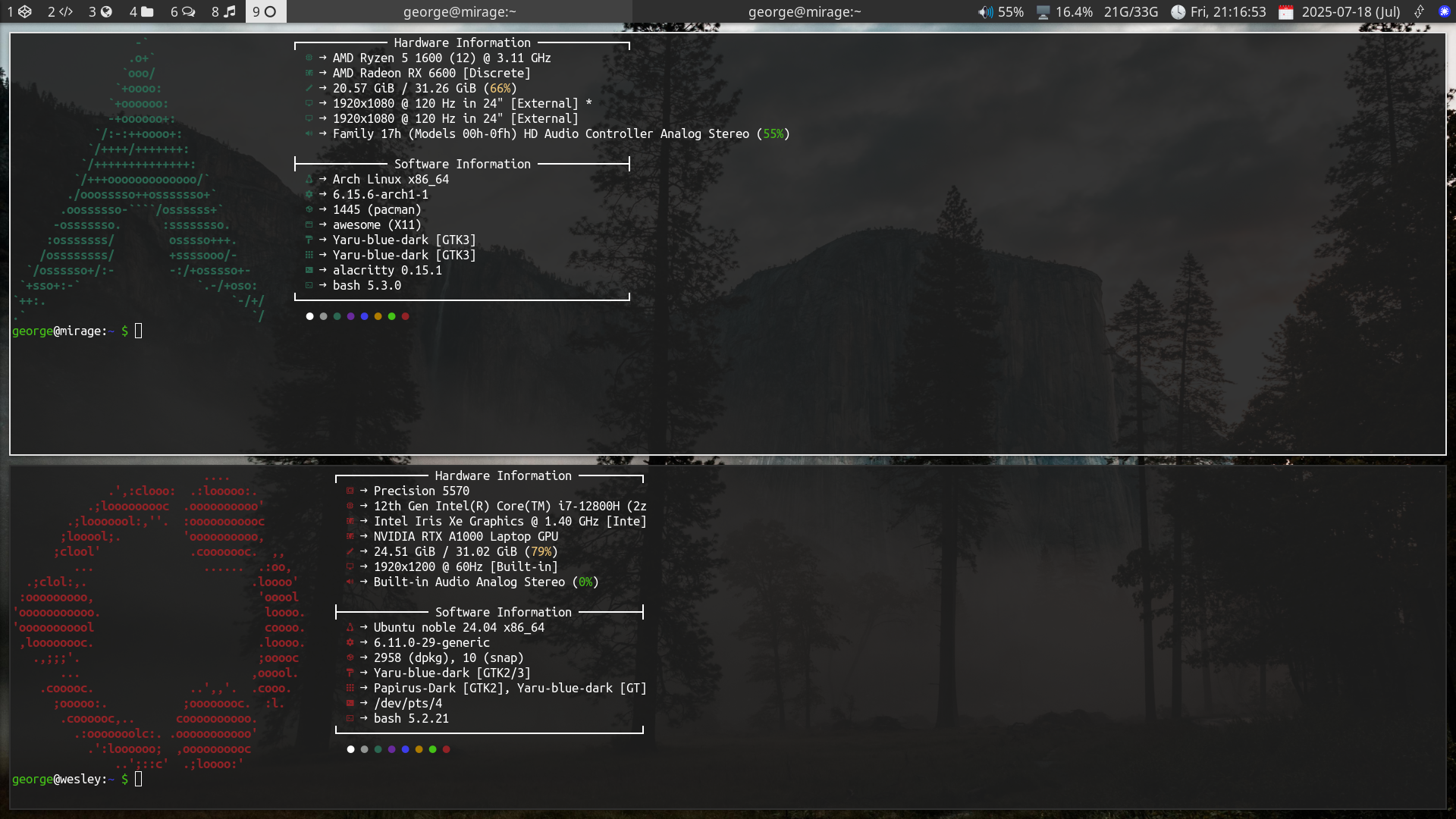
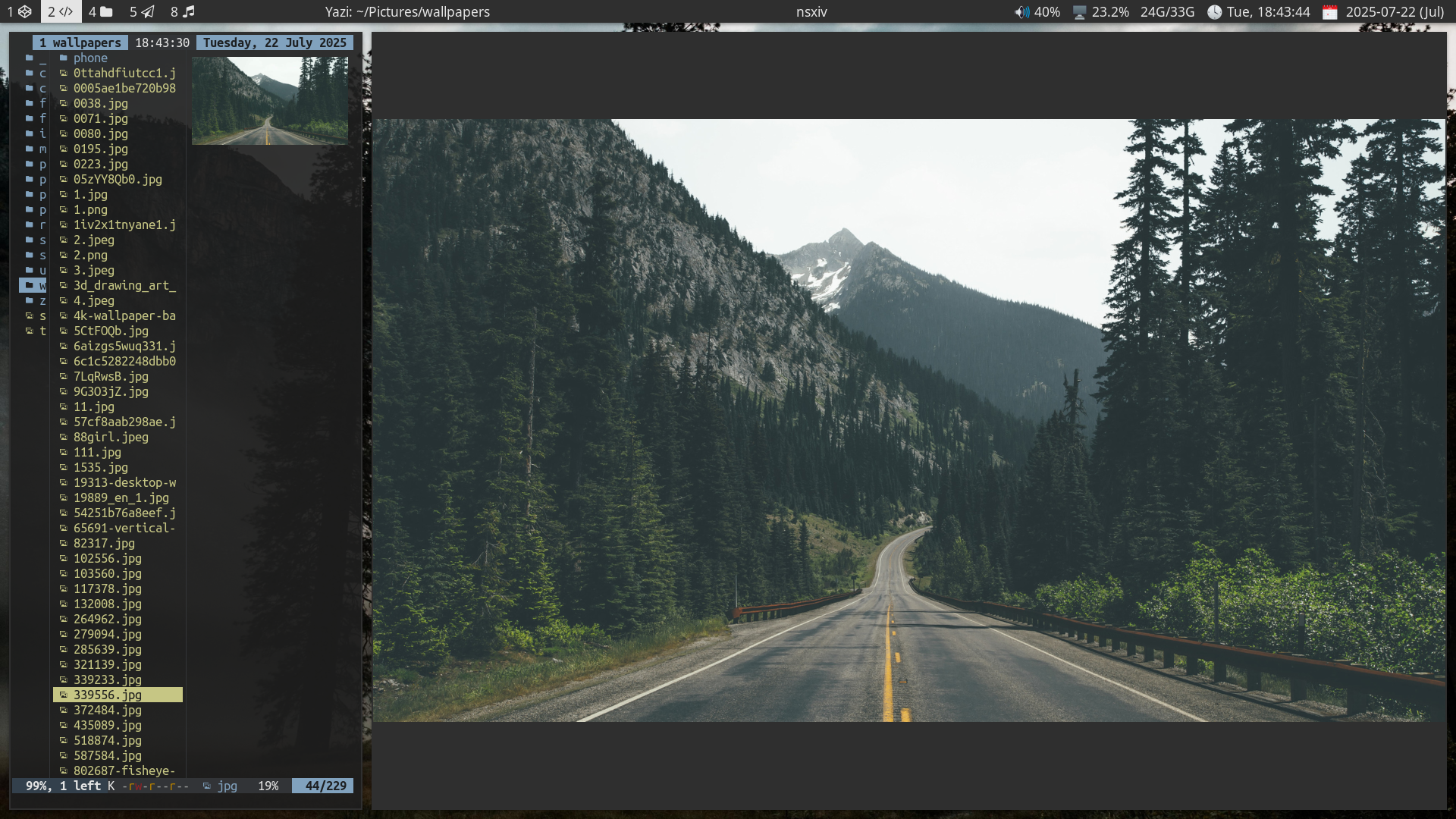

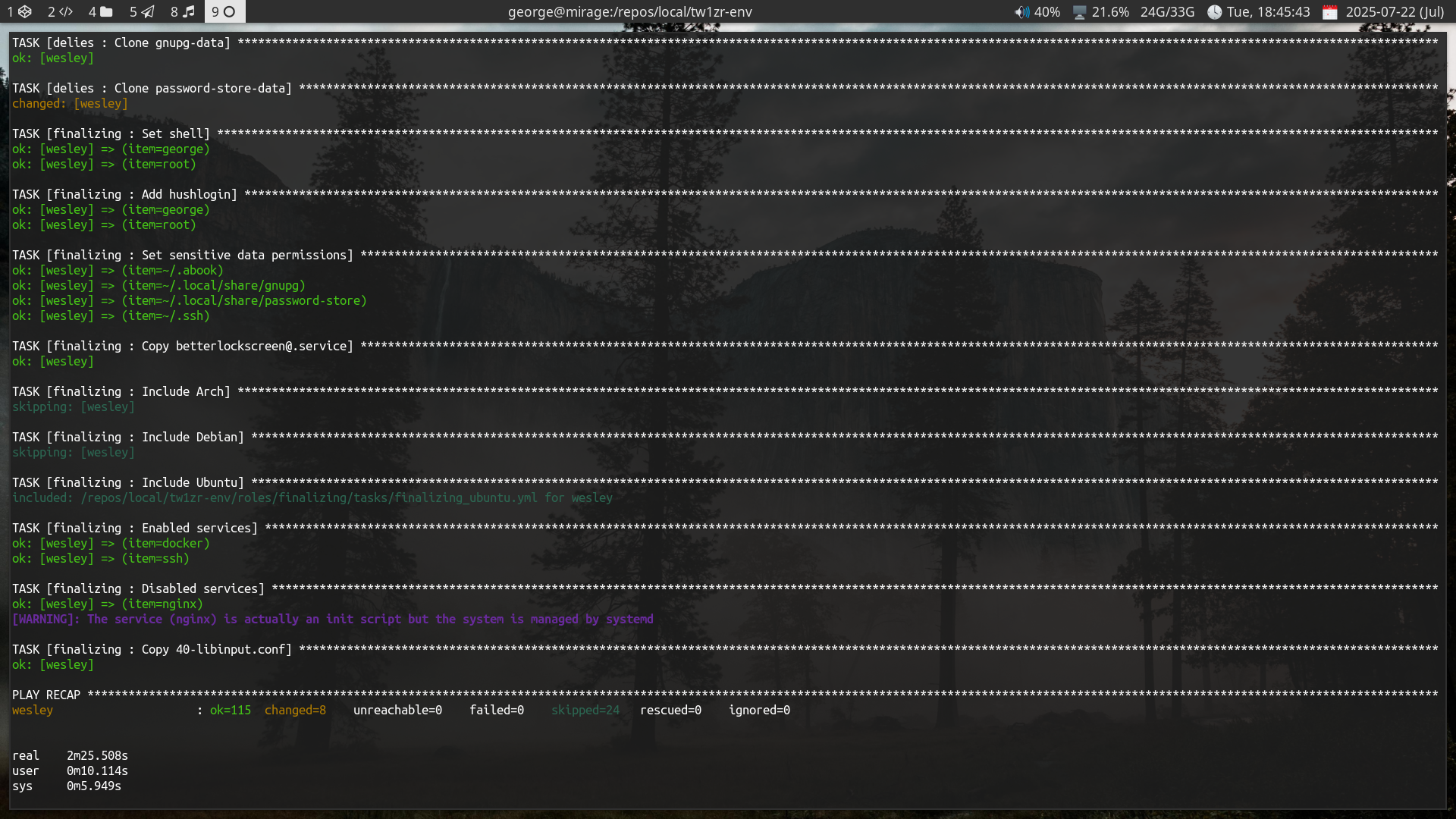
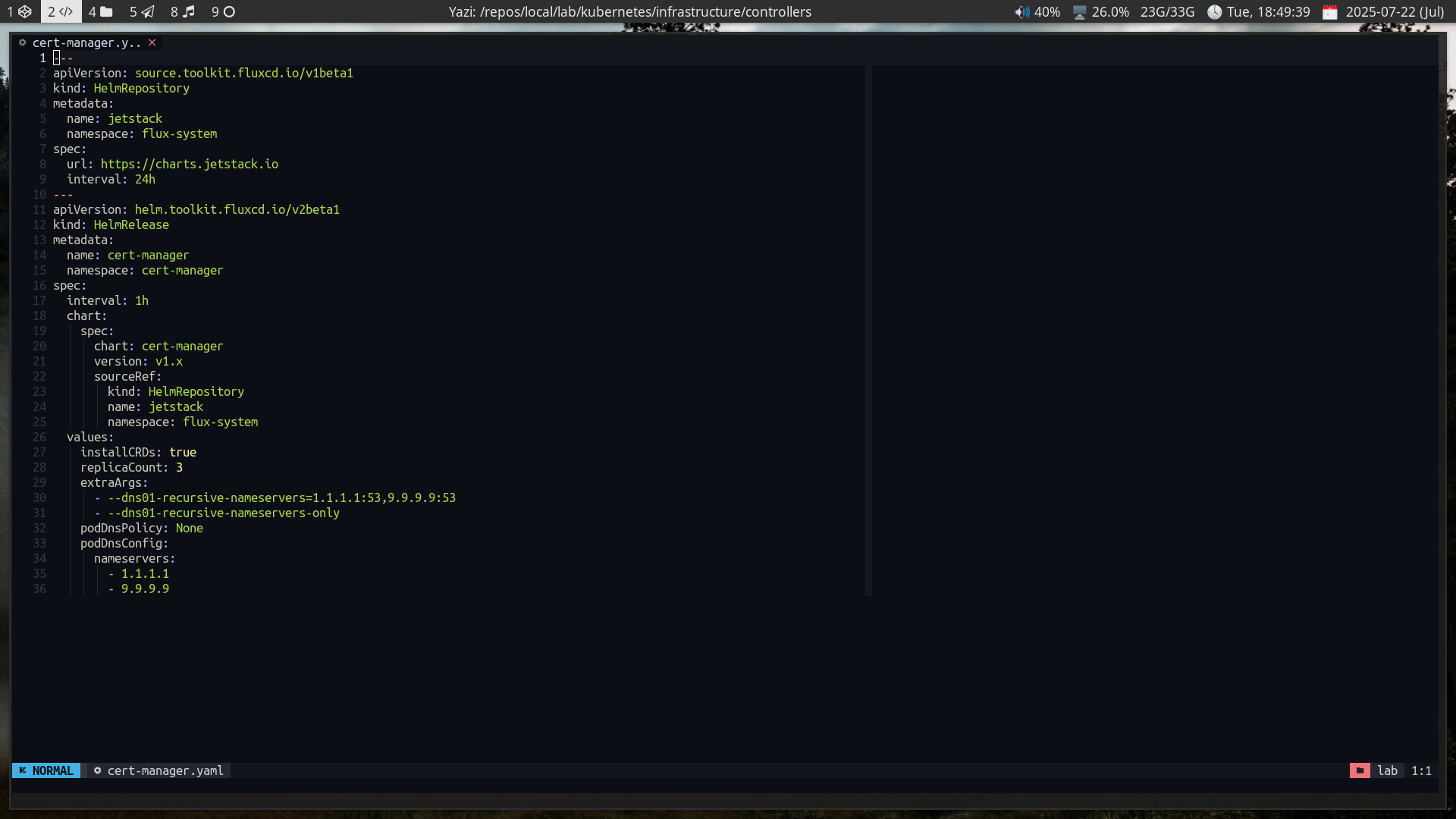
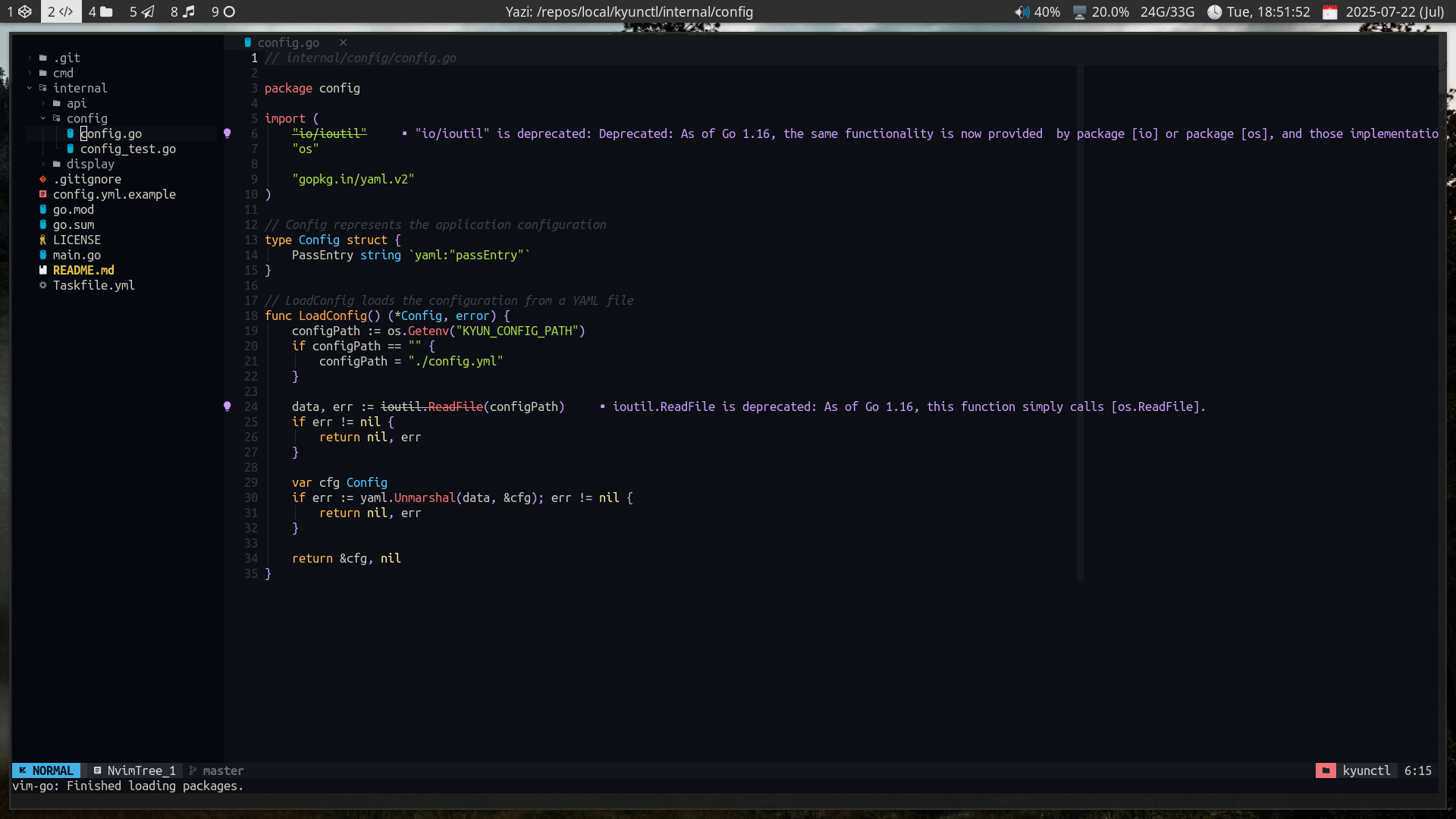
I prefer the command line for its efficiency and precision. However, for tasks that demand graphical interfaces, like photo or video editing, I opt for tools like GIMP, OpenShot, ImageMagick, and FFmpeg.
Technical proficiencies#
Check out my Sysadmin Playground series for in-depth deployments. Here’s a snapshot of my skill set:
Systems & infrastructure#
- GNU/Linux: Expertise in various distributions, deeply familiar with system internals.
- Kubernetes: Orchestrating containerised applications for scalable deployments.
- GitOps with Flux and ArgoCD: Implementing declarative infrastructure and continuous delivery for Kubernetes.
- Infrastructure as code: Terraform for provisioning, Ansible for configuration management and orchestration.
- Containerisation: Docker for building and managing containers.
- Web hosting: nginx and Apache for serving web applications.
- Ingress controller & reverse proxy: Traefik for dynamic routing and load balancing.
- Static site generation: Hugo for building fast, static websites.
- CI/CD: Github Actions and CircleCI for continuous integration and deployment pipelines.
- Monitoring & logging: Nagios, Checkmk, Prometheus, Grafana, and Datadog for comprehensive infrastructure and application monitoring.
- Version control: Managing code and infrastructure with Git.
Cloud services#
- AWS expertise: Proficient with services like ECS, EKS, EC2, S3, RDS, Lambda and others.
I frankly prefer hosting my services on my own infrastructure, but AWS is widely used in enterprise. I interact with it daily for work.
Networking#
- In-Depth networking knowledge: Comprehensive understanding of network protocols, security, and infrastructure design.
From the OSI model, to VLANs, subnetting and everything in between. I have created, configured and managed large and complex network systems.
Programming & scripting#
- Languages: Proficient in Go, PHP, Python, and bash for automation and development.
While actual programming is admittedly not my forte, I’m capable of doing it to a competent degree.
Self-hosted services#
For years, I’ve been self-hosting every service possible on my infrastructure. Learn more in my Why I self-host everything I can post.
Most of the following services I host are run inside a Kubernetes cluster in my house, this very website is hosted there as well.
- VPN servers: WireGuard and OpenVPN for secure connections.
- Overlay networks: Netbird for fast and encrypted mesh tunnels.
- E-mail servers: Postfix and Dovecot with web interfaces like Roundcube.
- Identity servers: Authelia and Kanidm for centralised management of users through OIDC.
- Media servers: Jellyfin for streaming media.
- Cryptocurrency nodes: Running a Monero (XMR) node accessible via Tor and WireGuard.
- Git servers: Utilising cgit, Gitea, and Forgejo for version control.
- Chat servers: Prosody for XMPP and Synapse, Dendrite, Conduit with Element for Matrix.
- File servers: Nextcloud, Seafile, and protocols like FTP, SFTP, SMB, and NFS.
- Search engines: Searx for a decentralised meta-search experience.
- Links aggregator and archival: Karakeep used for saving links about interesting things I find online and want to preserve.